- Hire Designer First: Always finish your construction documents first, then bid to 2–3 builders to get competitive, comparable pricing.
- Contract Structures: Fixed-price contracts require complete design details; cost-plus offers flexibility but shifts budget risk to you; GMP is the luxury industry standard.
- Critical Vetting: Request references from clients who finished 3–5 years ago to assess long-term build quality, and ask for designer references.
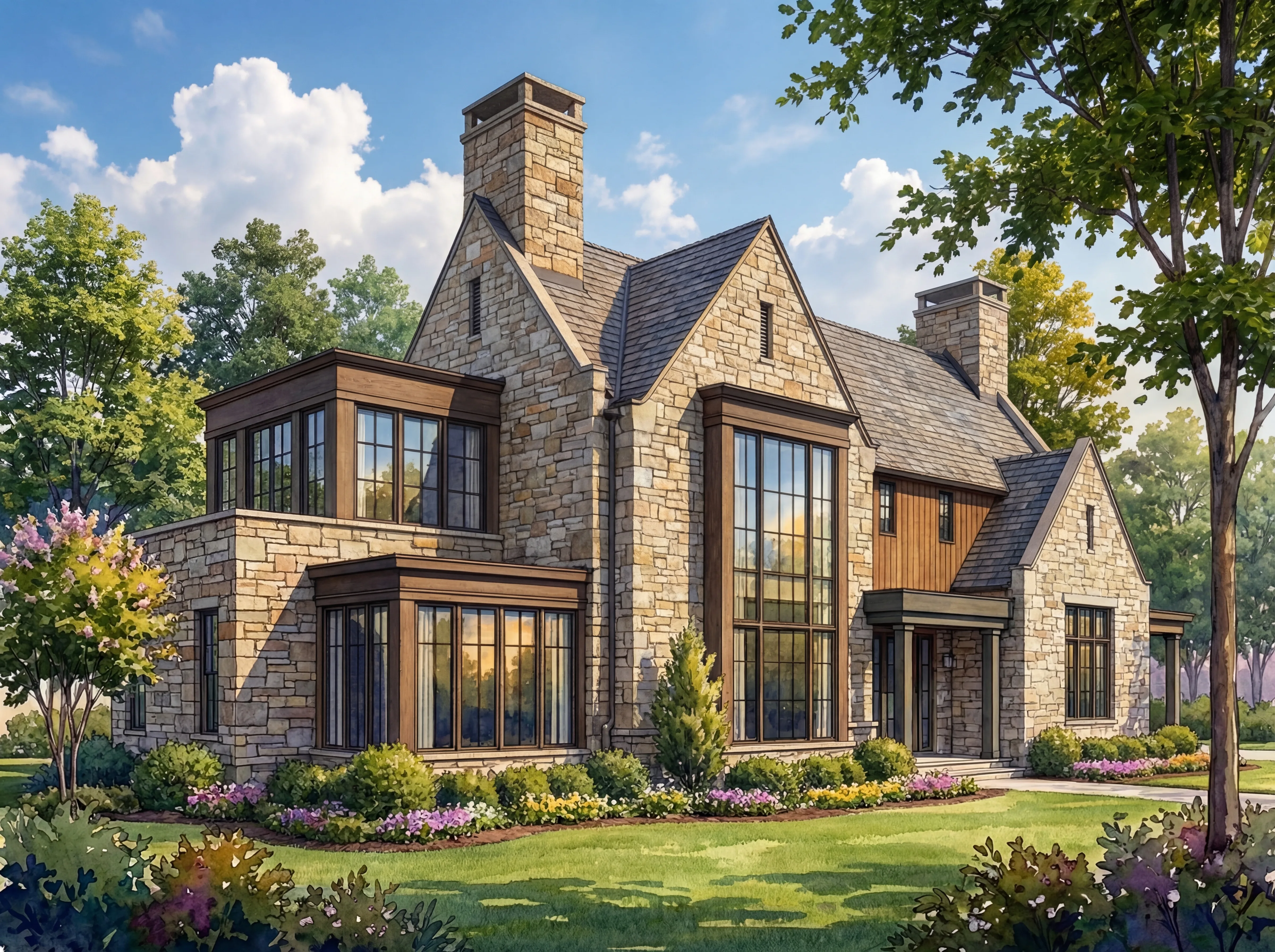
A note up front: we are a custom home design studio, not a builder. This guide is written from a designer's perspective, drawing on more than thirty years of combined design and construction experience. If you're researching custom home builders in Atlanta, the most useful person to learn from is often someone on the design side of the same projects — because we see what works and what doesn't from a different vantage point.
Searching for a custom home builder in Atlanta usually starts the same way. You've decided to build rather than buy. You've talked to friends who've done it. You have a rough sense of budget and lot preferences. You open Google and start looking at builder portfolios, expecting to find the right firm in a few hours of clicking.
What you'll find instead is twenty firms with beautiful websites and almost no way to tell them apart from the outside. Atlanta has dozens of competent custom home builders working in the $350-$600+ per square foot range. Most have impressive portfolios. Most have testimonials. Most will return your call promptly. The differences that matter are not the ones their marketing emphasizes.
This guide is about how to actually choose. It covers the questions worth asking, the contract structures Atlanta builders typically offer, the local cost context, the right sequence for hiring, and — most importantly — why your design partner should be the person helping you select your builder, not the other way around.
The Order Matters: Hire Your Designer Before Your Builder
This is the single most important point in the guide, so it goes first. The correct sequence for a luxury custom home in Metro Atlanta is:
- Engage your designer. Complete design through permit-ready construction documents (typically 6-18 months for a luxury custom home).
- Bid the documents to two or three qualified builders. Apples-to-apples pricing on the same defined scope.
- Sign the construction contract with the builder whose price, references, and approach fit your project.
Hiring a builder first is the most common mistake homeowners make on luxury custom builds. The sequence feels backwards — you're going to spend more money with the builder than with the designer, so it seems like you should pick the builder first. In practice, hiring a builder before design is complete locks you into:
- That builder's preferences for layouts, materials, and systems
- Their specific subcontractor relationships (which set the price)
- Their pricing structure (you've lost the ability to compare bids)
- Their schedule and approach, whether or not it actually fits your project
The alternative — complete design first, then bid — gives you negotiating leverage on the construction contract, which is the single largest financial commitment in the project. We covered this sequencing in more depth in our guide to the right order for hiring designer, builder, and engineers, but the takeaway is simple: design first, build second.
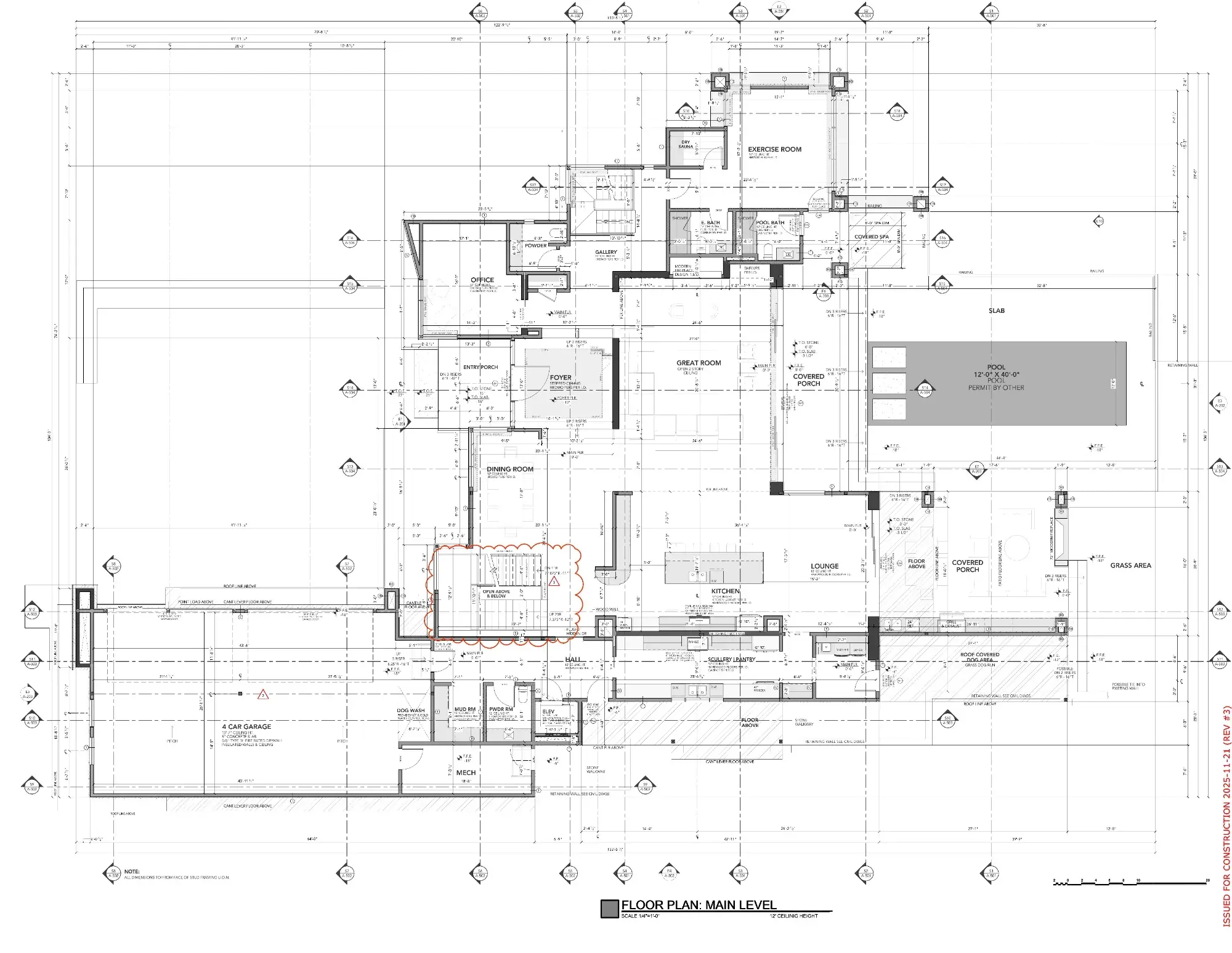
How Much Does a Custom Home Cost to Build in Atlanta?
Before evaluating builders, set realistic budget expectations. Metro Atlanta custom home construction costs vary by finish level, structural complexity, and site conditions — but the bands are knowable.
| Tier | Cost / sq ft | Typical scope |
|---|---|---|
| Mid-tier custom | $250 - $350 | 3,500-5,500 sf, builder-grade upgrades, single-family neighborhoods |
| Luxury custom | $350 - $600 | 5,000-9,000 sf, custom millwork, integrated outdoor living, premium finishes |
| Ultra-luxury | $600 - $1,000+ | 8,000-15,000+ sf, imported materials, complex sites, signature home design, full integration |
For a typical luxury custom home at 6,000 square feet in Metro Atlanta, total construction generally falls in the $2.1M to $3.6M range. Estate-scale builds in Milton, Alpharetta, or Buckhead frequently exceed $5M-$8M at 8,000-12,000+ square feet. Our cost guide breaks down where the money goes in detail.
The Three Contract Structures Atlanta Builders Offer
Custom home builders in Atlanta typically offer one of three contract structures. Each shifts cost and schedule risk between homeowner and builder differently.
Fixed-Price (Lump Sum) Contracts. The builder commits to a single total price for a defined scope. The homeowner pays that price regardless of the builder's actual costs (within allowance lines). Pros: predictable for the homeowner, the builder absorbs cost overruns. Cons: requires very complete construction documents to bid accurately; ambiguity in the plans becomes a contingency built into the price. Best fit when the design is fully documented and the homeowner values predictability over flexibility.
Cost-Plus Contracts. The homeowner pays actual construction costs plus a builder fee (either a fixed dollar amount or a percentage markup, typically 12-20%). The builder shows invoices; the homeowner pays them through. Pros: transparency, flexibility to make changes during construction, no inflated contingencies. Cons: homeowner absorbs cost overruns, harder to budget, requires high trust in the builder. Best fit when the design will continue evolving during construction or when the project's complexity makes fixed pricing impossible.
Guaranteed Maximum Price (GMP). A hybrid. The homeowner pays cost-plus up to a capped maximum; the builder covers any overruns above the cap. Pros: combines transparency of cost-plus with the ceiling of fixed-price. Cons: requires complete documents to set a meaningful GMP; the cap is usually set high enough that it functions more as protection than a budget. Best fit for most luxury custom builds — it's the contract structure most established Atlanta luxury builders prefer.
Whichever structure you choose, the quality of your construction documents determines whether the contract works as intended. Vague plans plus fixed-price equals inflated contingencies. Vague plans plus cost-plus equals runaway change orders. Vague plans plus GMP equals a cap set so high it offers no real protection. The plans are where the contract actually gets resolved — which is why design comes first.
Questions to Ask a Custom Home Builder Before Hiring
Most builders are well-prepared for the easy questions (years in business, projects completed, references from delighted clients). The questions that actually distinguish builders are the harder ones — and confident builders welcome them.
- How many homes at this scale have you completed in the past five years? Volume + recency. A builder who completed 30 mid-tier homes hasn't necessarily done 5,000-sf custom work. Ask specifically about projects in your size and quality range.
- Can I see your current job sites? Not just completed projects — active ones. How clean is the site? How are materials stored? How is safety handled? A walk through an active site tells you what your project will actually feel like.
- Can I get references from clients whose homes you finished three to five years ago? Recent clients are honeymoon-happy. Three-to-five-year clients tell you how the home is holding up, how warranty issues were handled, and whether the relationship survived first contact with the finished house.
- Which subcontractors do you use, and how long have those relationships been in place? Custom homes are built by subcontractors. A builder with a stable, long-term subcontractor team produces consistent quality. A builder who chases the cheapest sub on every project produces variable quality.
- What is your typical change-order rate? Industry average is 5-10% of construction cost. Custom luxury builds with complete documents should land at the lower end; builds with incomplete documents routinely run 15-25%+. Ask what their average is and what causes most of their change orders. The answer reveals whether they are working from complete plans or improvising in the field.
- Will you give references from designers (not just clients)? The designers who have worked with a builder tell you things clients cannot — whether the builder reads the plans, whether they call with smart questions, whether they cut corners, whether they fight changes. This is the single most underused reference source in custom home hiring.
- What is your typical payment schedule? Watch for builders who want large front-loaded payments before substantial work is complete. Industry-standard draw schedules tie payments to completed work percentages, not calendar months.
Builders who answer these questions with specifics — actual numbers, real names, traceable references — are the ones worth pursuing. Builders who deflect to general statements about "quality craftsmanship" are signaling something. Our guide to seven questions for hiring a designer uses a similar framework and is worth reading alongside this one.
Why Your Designer Should Help You Choose Your Builder
This is the part of the process most homeowners don't know exists. A good designer should be actively involved in your builder selection, not handing you a plan set and stepping back.
The reason is simple: your designer has worked with dozens of builders on similar projects. They know which builders read plans carefully and which improvise. They know which builders' subcontractor relationships produce consistent quality. They know which builders match well with which kinds of clients (some homeowners want collaborative; some want decisive; the wrong match makes the build painful). They know which builders deliver on the kind of design you've commissioned.
Builders, in return, have strong opinions about designers. The builders who consistently deliver for our clients are not always the most famous — they're the ones whose work matches the scale and philosophy of the design. A 12,000-sf estate calls for a different builder than a 4,500-sf transitional home, even if both are "luxury."
When you hire your designer, ask about their builder relationships explicitly. Which builders do they recommend for projects like yours? Which have they worked with most often in your area (Milton, Buckhead, Alpharetta, etc.)? Will they be involved in the bidding process and selection? A designer with strong builder relationships in your specific area is an enormous advantage that most homeowners undervalue.
The Designer-Builder Distinction (And Why It Matters Here)
One of the recurring sources of confusion in custom home hiring is the role distinction between designer, architect, and builder. Builder-searchers often assume they only need to hire a builder — who will "handle the plans" through a relationship with a designer or architect.
That can work for production homes built from existing plan sets. It does not work for luxury custom homes. The design phase requires deep involvement from a design professional who works for the homeowner — not for the builder. A designer hired by the builder is going to design what's easy for the builder, not what's best for the homeowner. We covered this in detail in our guide to architect vs. residential designer vs. builder roles, including which states require architect involvement and which allow qualified residential designers. For most single-family residential work in Georgia, the homeowner has a legitimate choice — but in every case, the designer should be the homeowner's representative, not the builder's.
How Daniel Allen Designs Fits Into Your Build Team
We are a luxury residential design studio in Metro Atlanta. We are not a builder. Our role is to produce permit-ready construction documents that your builder can price accurately, build from with confidence, and use to deliver the home you commissioned.
Our founder, Daniel Sievers, spent over twenty years as a custom home builder before transitioning to full-time design. That construction background means we draw documents builders can actually build from — fewer assumptions, fewer field questions, fewer change orders. We call it the Builder's Eye, and it's the reason builders consistently tell us our documents are easier to price and easier to build than typical residential drawings.
We've worked with a range of Metro Atlanta custom home builders across the past decade — projects like the Milton Farmhouse are the result of that collaboration. When our clients begin the builder-selection process, we help — by recommending builders whose work matches the project's scale and philosophy, by participating in builder interviews, and by reviewing bids once they come back. The right builder for your project may or may not be one we have a relationship with; what matters is that you make the choice with the benefit of someone who's seen the construction side of dozens of similar builds.
Choosing a Custom Home Builder for Your Atlanta Project?
If you're earlier in the process — still researching builders, still figuring out the right sequence, still unsure whether you need a designer first or a builder first — a short conversation usually resolves the unknowns. We're happy to review your project, walk you through how the typical Atlanta luxury custom home is staffed, and recommend the right next step (even if that step is hiring someone other than us).
Start with a 20-minute Project Fit Call. Come with a rough sense of your budget, your approximate timeline, and whether you already have a lot. We'll take it from there. No obligation. No sales pitch.
Schedule a Project Fit Call · Our process · Architect vs. Designer vs. Builder
Frequently Asked Questions
How do I choose a custom home builder in Atlanta?
Choosing a custom home builder in Atlanta comes down to four criteria: completed projects at your scale and style, a contract structure that fits your risk tolerance, references from both clients and the design teams they've worked with, and a track record of finishing on the budget they bid. Get permit-ready construction documents from a designer first, then bid those same documents to two or three qualified Atlanta custom home builders — that's the only way to get apples-to-apples pricing. Hiring a builder before design is complete locks you into their preferences, subcontractors, and pricing before you have anything for them to bid on.
How much does a custom home cost to build in Atlanta?
In Metro Atlanta, luxury custom home construction typically runs $350 to $600+ per square foot, depending on finishes, structural complexity, and site conditions. A 6,000 square foot custom home with high-end finishes generally falls in the $2.1M to $3.6M range for construction alone — total project cost (land excluded) typically lands 2-5% higher with design fees and engineering included. Estate-scale builds in Milton, Alpharetta, and Buckhead frequently exceed $5M to $8M for construction at 8,000-12,000+ square feet.
Do I hire a builder before or after a designer?
Hire your designer first. The design phase establishes what you are building; the builder's role is to construct what the designer documents. Hiring a builder before design is complete locks you into that builder's preferences, subcontractor relationships, and pricing structure before you have anything for them to bid on. The right sequence is: hire designer, complete through construction documents, then bid to two or three qualified builders. Builders should be involved during design development for preliminary pricing conversations — not before, and not in place of a designer doing their job.
What contract structures do Atlanta custom home builders use?
Atlanta custom home builders typically use one of three contract structures: fixed-price (lump sum) where the builder commits to a total price for a defined scope, cost-plus where the homeowner pays actual costs plus a builder fee or percentage markup, and guaranteed maximum price (GMP) which combines elements of both — the homeowner pays cost-plus up to a capped maximum. Fixed-price requires the most complete design documents to work fairly; cost-plus shifts cost risk to the homeowner but allows more flexibility; GMP is the middle ground most luxury builders prefer. Whichever structure you choose, the quality of your construction documents determines whether the contract works as intended.
What questions should I ask a custom home builder before hiring?
Before hiring any Atlanta custom home builder, ask: How many homes at this scale have you completed in the past five years? Can I see your current job sites and recent completed projects? Can I get references from clients whose homes you finished 3-5 years ago (to assess long-term quality)? Which subcontractors do you use, and how long have those relationships been in place? What's your typical change-order rate, and what are the most common reasons? How do you handle disputes during construction? Will you provide a sample of your monthly draw and change-order documentation? A confident builder welcomes these questions; one who deflects is signaling something.
What's the difference between a custom home builder and a production builder in Atlanta?
A custom home builder constructs a home designed specifically for a homeowner on a specific lot, working from custom construction documents. The home is unique. A production builder constructs homes from a set of pre-designed plans offered as options within a development or subdivision, typically with limited customization. The home is one of many similar builds. Custom home builders in Atlanta typically work in the $350-$600+ per square foot range with significant variation; production builders work in the $200-$400 per square foot range with more predictability. The choice depends on whether you want a home designed for your specific lot and family, or a well-built home from a tested floor plan.
This article is written from a custom home design firm's perspective. It is not legal, financial, or construction-contract advice. Always work with a qualified attorney to review any construction contract before signing, and verify local permitting requirements with your municipal building department.