- Design Fees: Range from 2% to 10% of total construction cost for luxury custom home design.
- Atlanta Construction Costs: Range from $300 to $600+ per square foot for high-end luxury custom homes.
- Builder's Eye ROI: Comprehensive construction documents prevent common change orders (averaging $47K per project) and reduce timelines by 2–4 months.
Understanding Custom Home Design Fees
One of the most common questions we receive is about the cost of designing a custom home. It is a fair question — and one that too many firms avoid answering directly. At Daniel Allen Designs, we believe transparency about pricing builds the same kind of trust that transparency in our construction documents builds between you and your builder.
Design Fee Ranges
Design fees for a luxury custom home typically range from 2% to 10% of the total construction cost, depending on the size, complexity, and scope of the project. Several factors influence where a project falls within this range:
Home size — A 4,500-square-foot home requires less documentation than a 12,000-square-foot estate. Larger homes involve more floor plan area, more elevations, more details, and more coordination.
Design complexity — A simple rectangular footprint with a single roof system costs less to document than a multi-wing plan with multiple roof intersections, varying heights, and complex geometry.
Scope of services — Some clients need full-service design from concept through construction documents. Others come to us with an existing concept that needs to be developed into construction-ready documentation.
Site conditions — Projects on challenging sites (steep grades, complex setbacks, restrictive HOA requirements) require additional design and documentation effort.
What Design Fees Include
Our design fee covers the complete four-phase process:
Phase 1: Discovery & Programming — Understanding your lifestyle, functional needs, site conditions, and project goals. This phase typically includes site analysis, programming discussions, and preliminary design direction.
Phase 2: Schematic Design — Developing the initial floor plan concepts, exterior design direction, and spatial organization. You will review and approve the overall approach before we invest in detailed documentation.
Phase 3: Design Development — Refining all design decisions — materials, windows, doors, cabinetry style, fixture direction, and structural approach. This is where the design becomes fully resolved.
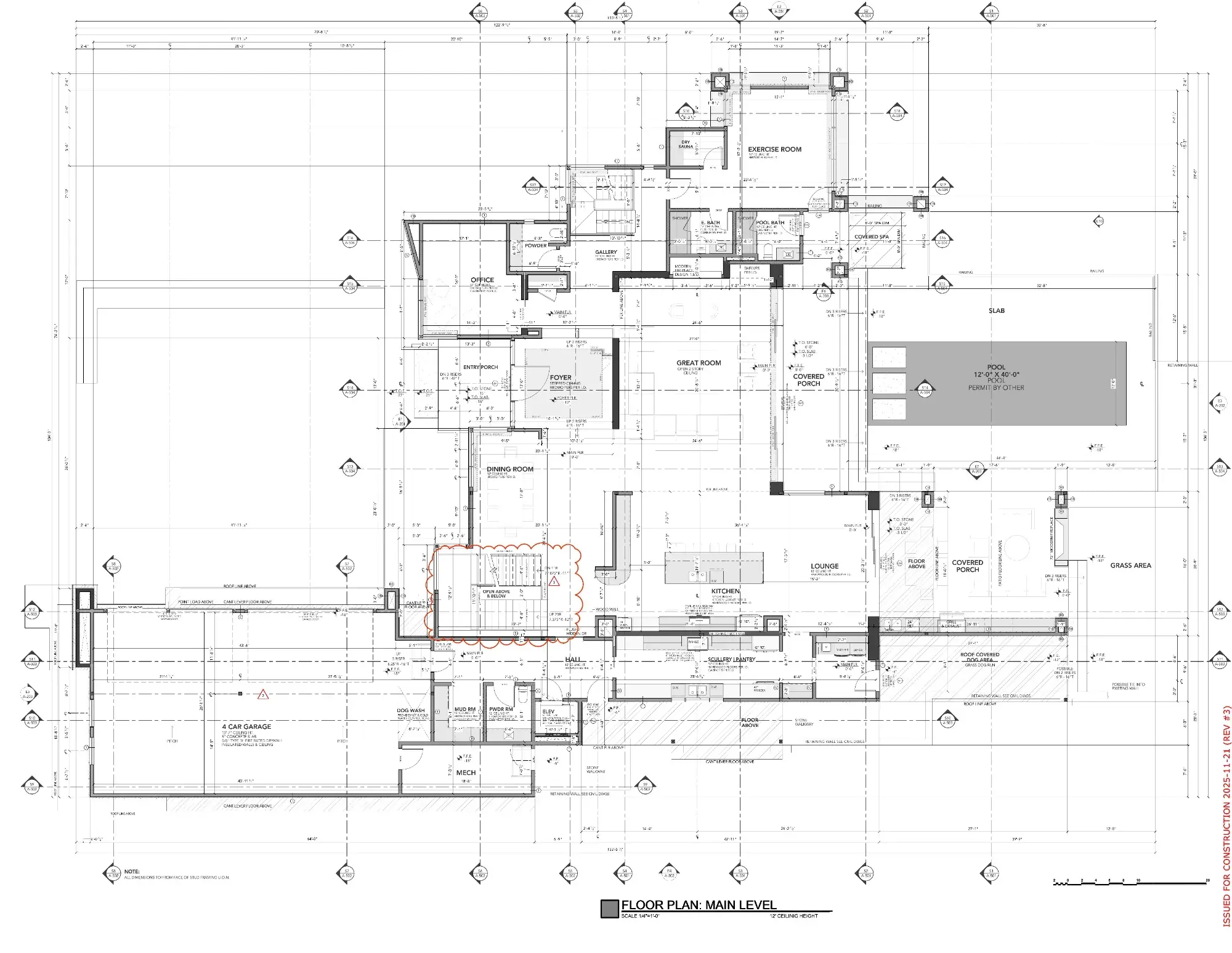
Phase 4: Construction Documents — Producing the complete drawing set: detailed floor plans, exterior elevations, building sections, roof plans, door and window schedules, finish schedules, interior elevations, electrical plans, structural coordination notes, and specifications. These are the documents your builder will use to price, permit, and construct your home. Understanding why your designer's construction experience matters ensures these drawings are actually builder-ready.
Custom Home Construction Costs: National Ranges
Beyond design fees, understanding construction costs is essential for realistic project planning. Custom home construction costs vary significantly by region, finish level, and complexity. The per-square-foot tiers below hold across most U.S. luxury markets:
| Construction Tier | Cost / sq ft |
|---|---|
| Standard custom construction | $250–$350 |
| High-end luxury construction | $350–$500 |
| Ultra-luxury / estate construction | $500–$600+ |
For a 6,000-square-foot luxury custom home, this translates to a construction budget of approximately $1.8 million to $3.6 million or more, depending on finish level and complexity.
Regional market, land values, site-preparation requirements, and local builder pricing all move the figure. For Metro Atlanta specifically — per-square-foot ranges, local permitting overlays, and a worked 6,000 SF example — see our dedicated cost to build a custom home in Atlanta guide. For a real-world example, our Buckhead Courtyard Residence — a 7,800-square-foot modern courtyard home — illustrates where a luxury custom build falls within these ranges.
The ROI of Comprehensive Design Documents
Design fees represent a small fraction of total project cost — typically 1% to 3% of construction value. The return on this investment is significant:
- Reduced change orders. Industry data shows average change order costs of $47,000 per custom home project. Comprehensive construction documents — the kind produced through our Builder's Eye methodology — address the issues that generate these costs before construction begins.
- Shorter construction timelines. Clear, complete documents enable faster permitting, accurate builder pricing, and fewer field decisions. This can reduce overall project timelines by 2 to 4 months.
- Better builder bids. When multiple builders bid on thorough, detailed documents, their pricing is more accurate and more competitive. Ambiguous documents invite padding and exclusions.
- Protected relationships. The most common source of homeowner-builder conflict is the gap between expectations and documentation. When the documents are clear, the relationship stays healthy.
Getting Started
If you are planning a custom home — whether you are in the early conceptual stages or have land under contract — we welcome the conversation about your project's scope, budget, and timeline. Our initial consultation is complimentary and focused on understanding whether we are the right fit for your project.