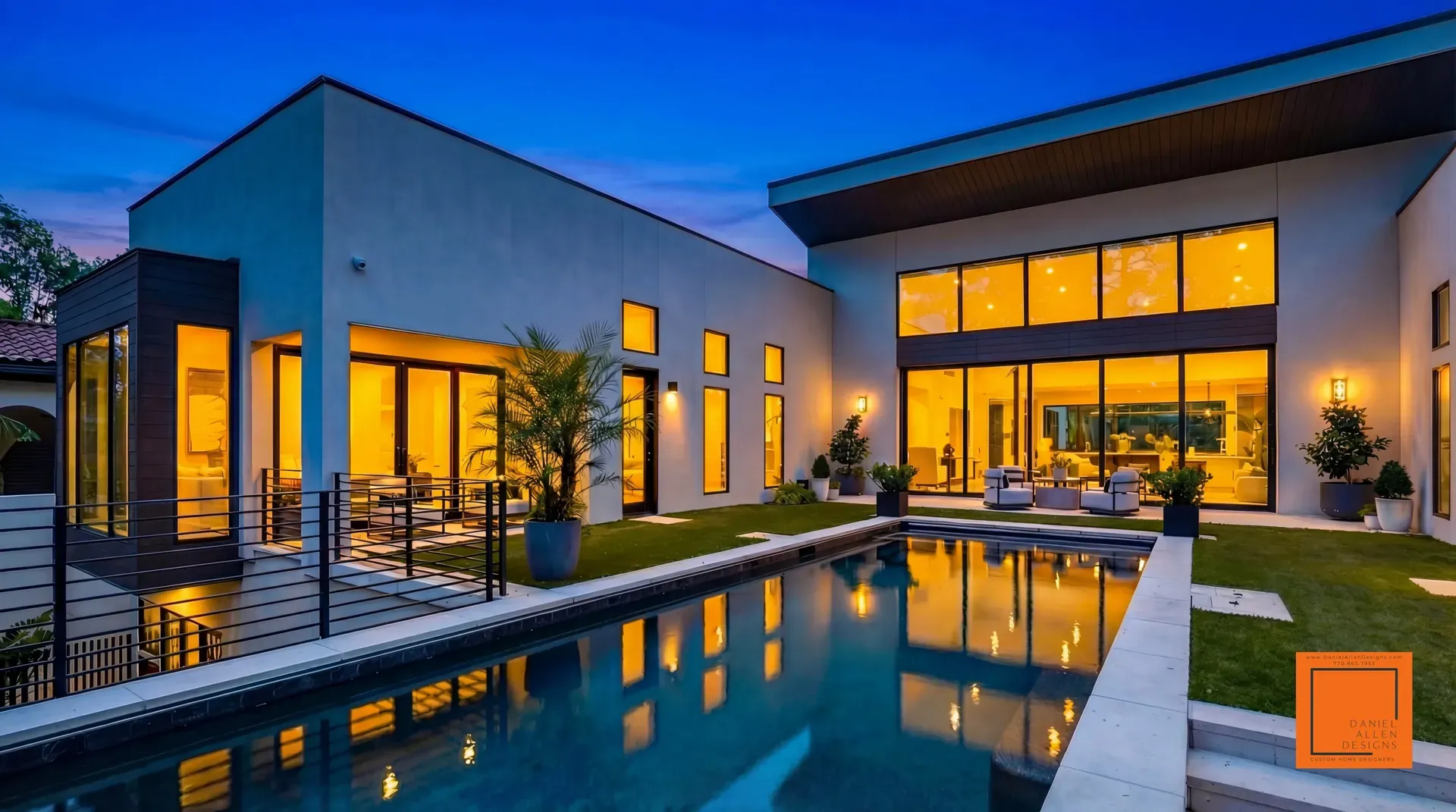
Why choose Daniel Allen Designs for your luxury custom home? Because most residential designers in Metro Atlanta have never built a home. They design from the studio — they have never managed a concrete pour, coordinated a roofing crew, or discovered mid-build that a wall section cannot accommodate the specified window header. Daniel Allen Sievers spent 20+ years as a custom home builder before dedicating his practice to design, and that construction experience is embedded in every floor plan, every section detail, and every permit-ready construction document we produce.
- 30+ Years Experience: Two decades building custom homes + a decade designing them. No other Atlanta design studio brings this depth of construction knowledge to the drafting table.
- The Builder's Eye: Every design passes a proprietary 7-dimension constructability review before documents leave the studio.
- The Problem We Solve: 78% of custom homes exceed budget. The #1 cause is incomplete design documents — not bad builders.
- Construction Documents That Work: Builders consistently report tighter bids, fewer RFIs, and zero change orders caused by design gaps.
The Problem: A Gap Between Design and Construction
The custom home industry has a well-documented problem: beautiful designs that cannot be built as drawn. This happens because most design professionals — whether architects, draftspeople, or design-build firms — lack deep, hands-on construction experience. They design from the studio. They have never stood in a foundation, managed a concrete pour, coordinated a roofing crew, or discovered mid-build that a wall section cannot accommodate both the specified window and the required header.
The consequence is predictable: change orders, cost overruns, schedule delays, and frustrated relationships between homeowners and their builders. Industry data shows that 78% of custom homes exceed their original budget, with average change order costs of $47,000. Much of this originates in design inadequacy — documents that looked complete but were not.
Our Answer: A Designer Who Built Homes First
Daniel Allen Designs was founded by Daniel Allen Sievers, who spent more than 20 years as a custom home builder before dedicating his practice to residential design. This is not a marketing claim — it is the foundation of everything we do.
When Daniel designs a floor plan, he is simultaneously evaluating it through the lens of a builder. Can this be framed with standard methods? Will this mechanical layout require field modifications? Does this roof system create hidden structural costs? Is this material specification realistic for the project's budget and timeline?
We call this the Builder's Eye methodology — a systematic review of every design decision across seven critical dimensions of constructability.
How We Compare
Traditional Architect
Traditional architects bring formal training in design theory, aesthetics, and building science. They produce construction documents that meet code requirements and express a design vision. However, many architectural firms have limited hands-on construction experience. Their documents may be technically correct but practically incomplete — missing the builder-specific details that prevent change orders and pricing surprises.
What we do differently: We provide the same design quality with an additional layer of construction intelligence. Our documents include the details builders actually need — sequencing notes, material lead-time awareness, constructability solutions, and cost-conscious alternatives that do not compromise design intent.
Design-Build Firm
Design-build firms combine design and construction under one roof, which can streamline communication. However, the design component in many design-build firms is secondary to the construction operation. The designer may be a drafter or junior designer, not a principal with decades of independent design experience. The design may also be influenced by what is convenient for the builder rather than what is best for the homeowner.
What we do differently: We are an independent design studio — not tied to any builder. This means our loyalty is entirely to you and your vision. We produce documents that any qualified builder can bid on, ensuring competitive pricing and full accountability. You choose your builder; we give them documents they can trust.
Residential Draftsperson
Draftspeople can produce floor plans and basic construction documents at lower cost. However, they typically lack the design depth and construction knowledge needed for luxury custom homes. The resulting documents often require significant supplementation by the builder, structural engineer, or other consultants — which can negate the initial cost savings.
What we do differently: Our documents are comprehensive from day one. We coordinate with structural engineers, civil engineers, and MEP consultants as an integrated part of our process. The result is a construction document package that is complete, coordinated, and ready for builder pricing — not a starting point that requires weeks of additional work.