Virginia-Highland Custom Home | Daniel Allen Designs Skip to content

Case Study

Virginia Highland House

A modern interpretation of the Virginia Highland bungalow vernacular — designed not just for a client, but around a set of constraints that, left unresolved, would have killed the project before a single drawing was complete.

3,700 + 1,000

SF + Garden Level

July 2026

Under Construction

Urban Modern

Style

$1.8M

Build Cost

Overview

The site at 1010 Courtenay Drive sits at the intersection of Courtenay and North Highland Avenue — a corner lot in one of Atlanta's most established intown neighborhoods. Virginia Highland's residential fabric is defined by tight lots, mature tree canopy, and a mix of renovated bungalows and new construction that must hold its own against a century of neighborhood character.

A corner lot sounds like a premium. In practice, it introduces constraints that interior lots avoid entirely. Two street frontages mean two front setbacks instead of one, compressing the buildable footprint from both directions. The home must present a composed elevation to two public faces, not just one. And the lot's 0.28-acre footprint — generous by Virginia Highland standards — becomes surprisingly tight once zoning math enters the equation.

This site presented three compounding problems: floor-area ratio regulations that made the client's program mathematically impossible, a basement garage threshold that triggered additional FAR counting, and a protected boundary tree with an arborist-mandated root ball exclusion zone that cut into the buildable footprint. Each problem had a solution. None of the solutions were obvious. And none of them could be solved independently — the resolution of one affected the geometry of the others.

This is where design and construction experience operate as a single discipline.
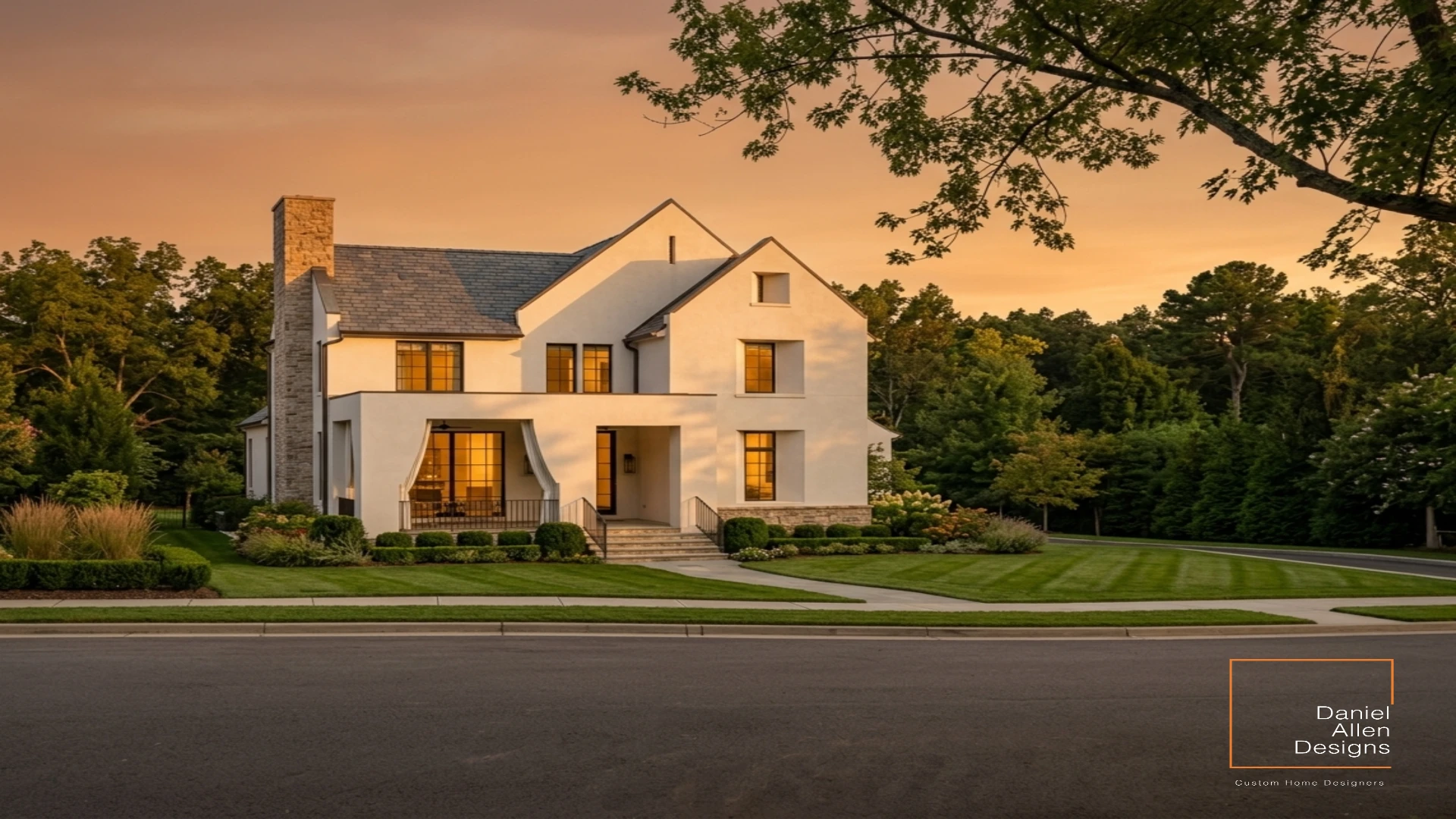
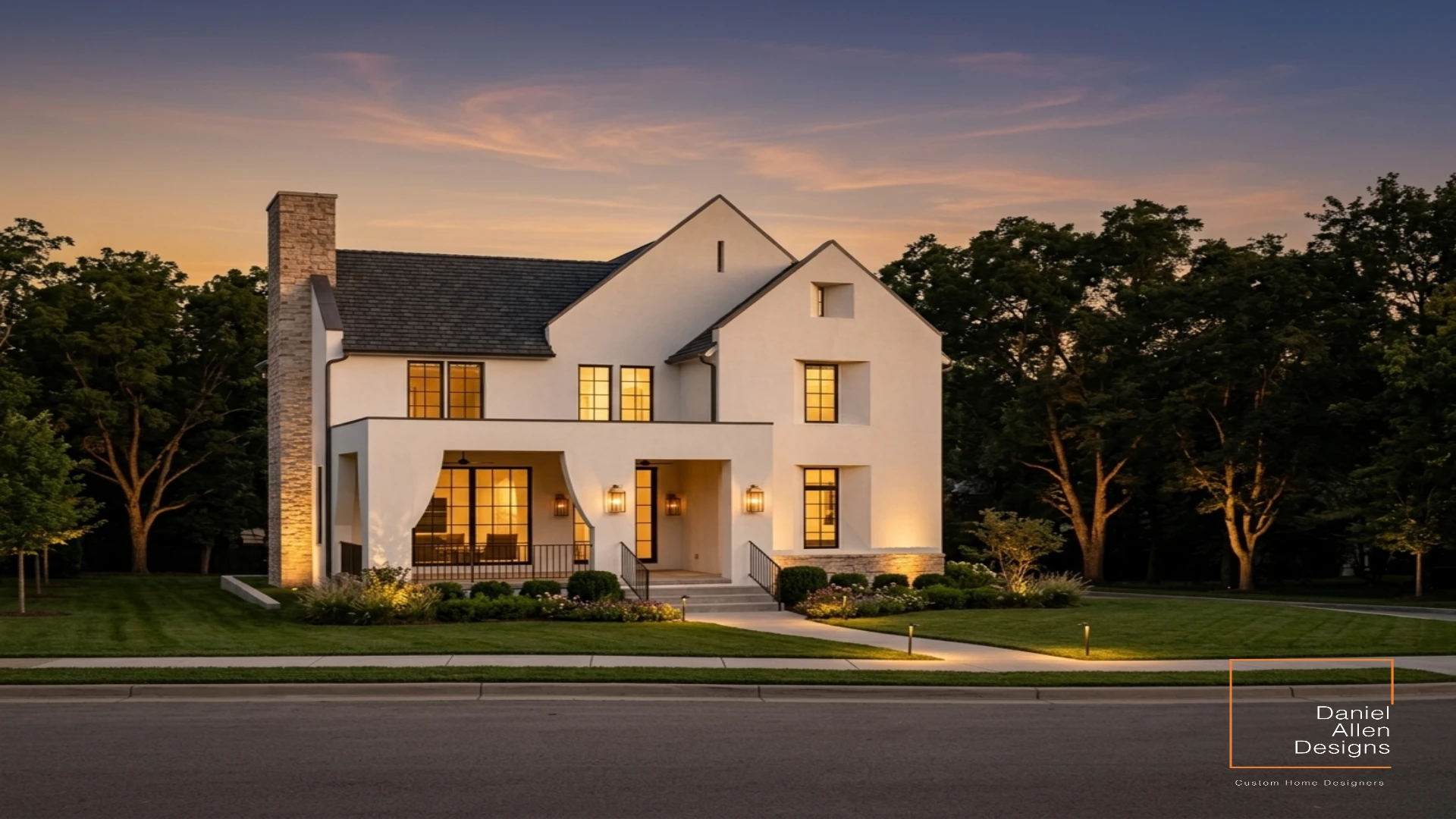
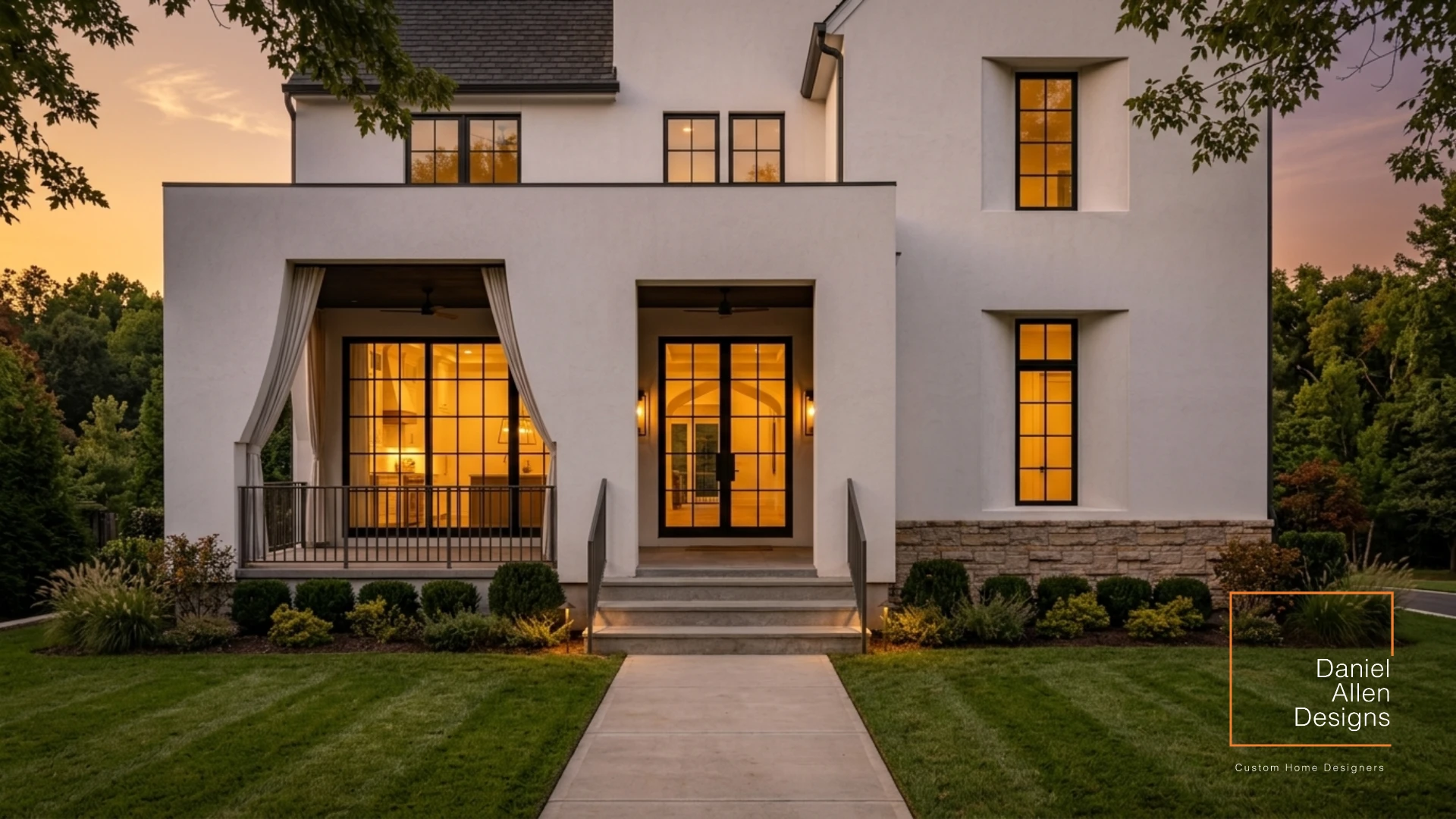
Daniel Allen Designs custom home in Virginia-Highland, Atlanta, Georgia — European stucco facade with covered porch, stone chimney, and sunset lighting
Custom home front elevation by Daniel Allen Designs — Virginia-Highland, Atlanta, Georgia

The Problem: FAR Restrictions and the Basement Trap

Floor-area ratio is the ratio of a home's total conditioned square footage to the lot's total area. In Virginia Highland, Atlanta's zoning code caps that ratio to control the scale of new construction relative to existing homes. On a 0.28-acre lot, the FAR cap places a hard ceiling on how much house can be built — and on a corner lot with two front setbacks already reducing the buildable footprint, the margin is thinner than most homeowners expect.

The client's program required 3,750 square feet of living space, a two-car basement garage, and a usable yard. Under a standard FAR analysis, the basement square footage — including the garage — counted toward the total. The math did not close. The garage consumed its allowable share of the basement. The basement consumed its allowable share of the FAR. And the livable square footage above grade was compressed below what the family needed. The project, as initially programmed, could not be built.

Atlanta's zoning code adds a second constraint: the basement garage footprint cannot exceed 25% of the overall house square footage. On a lot this size, that threshold arrives quickly. A two-car garage approaches the limit on its own. Add storage, a mechanical room, and a stairwell, and the basement is fully consumed before a single finished room is counted.

Both constraints had to be resolved simultaneously, not sequentially. Solving one without accounting for the other would simply shift the deficit.

The code, however, provides a path. Basement square footage is excluded from FAR calculations when the basement floor is a minimum of 50% below finished grade — the grade as measured at the exterior perimeter of the foundation. That threshold became the design target.

The challenge: the site sloped around the corner of the property and down to the garage floor. The property needed help along the North Highland side — we needed to design the house and side yard to work together.

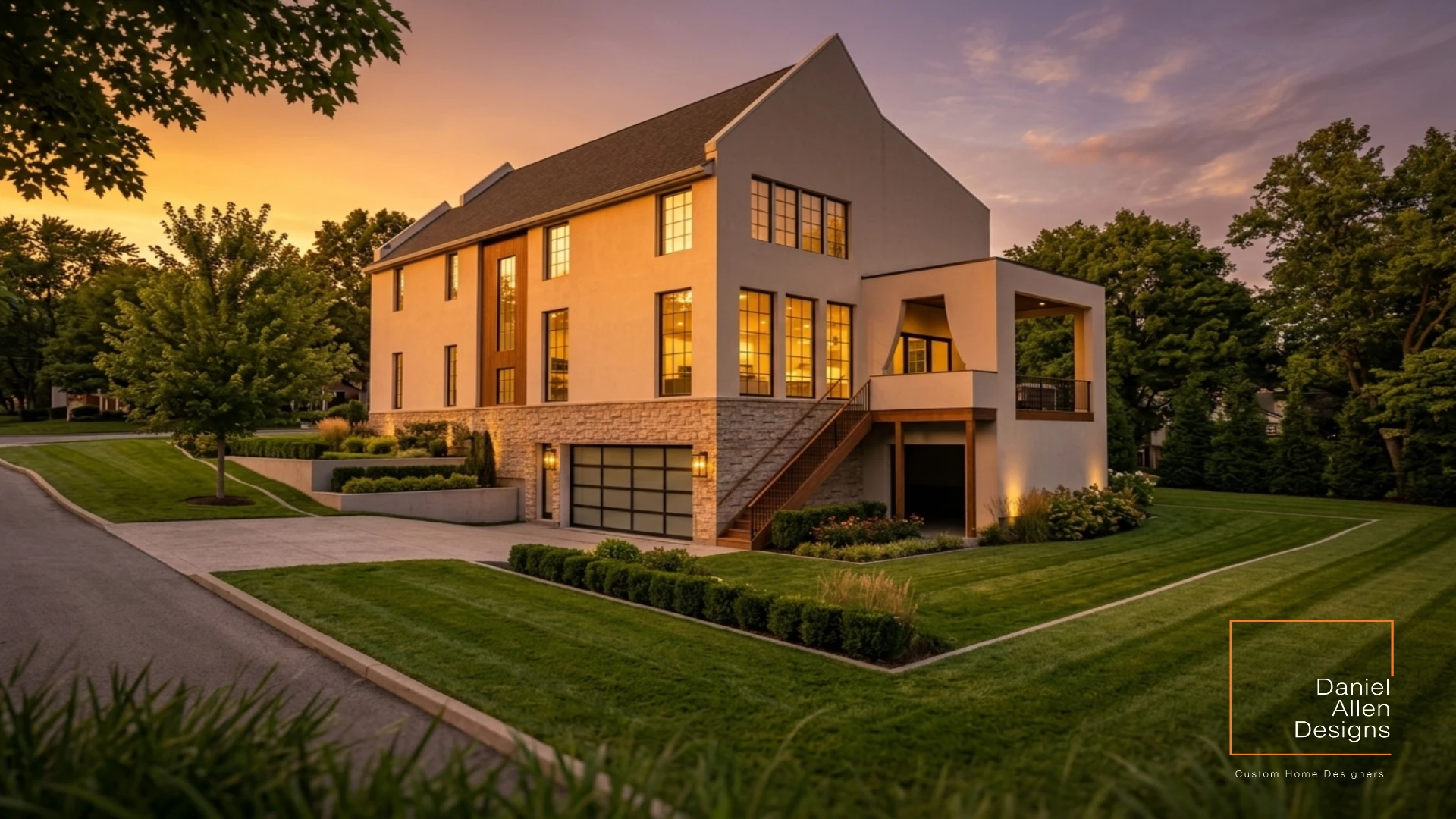
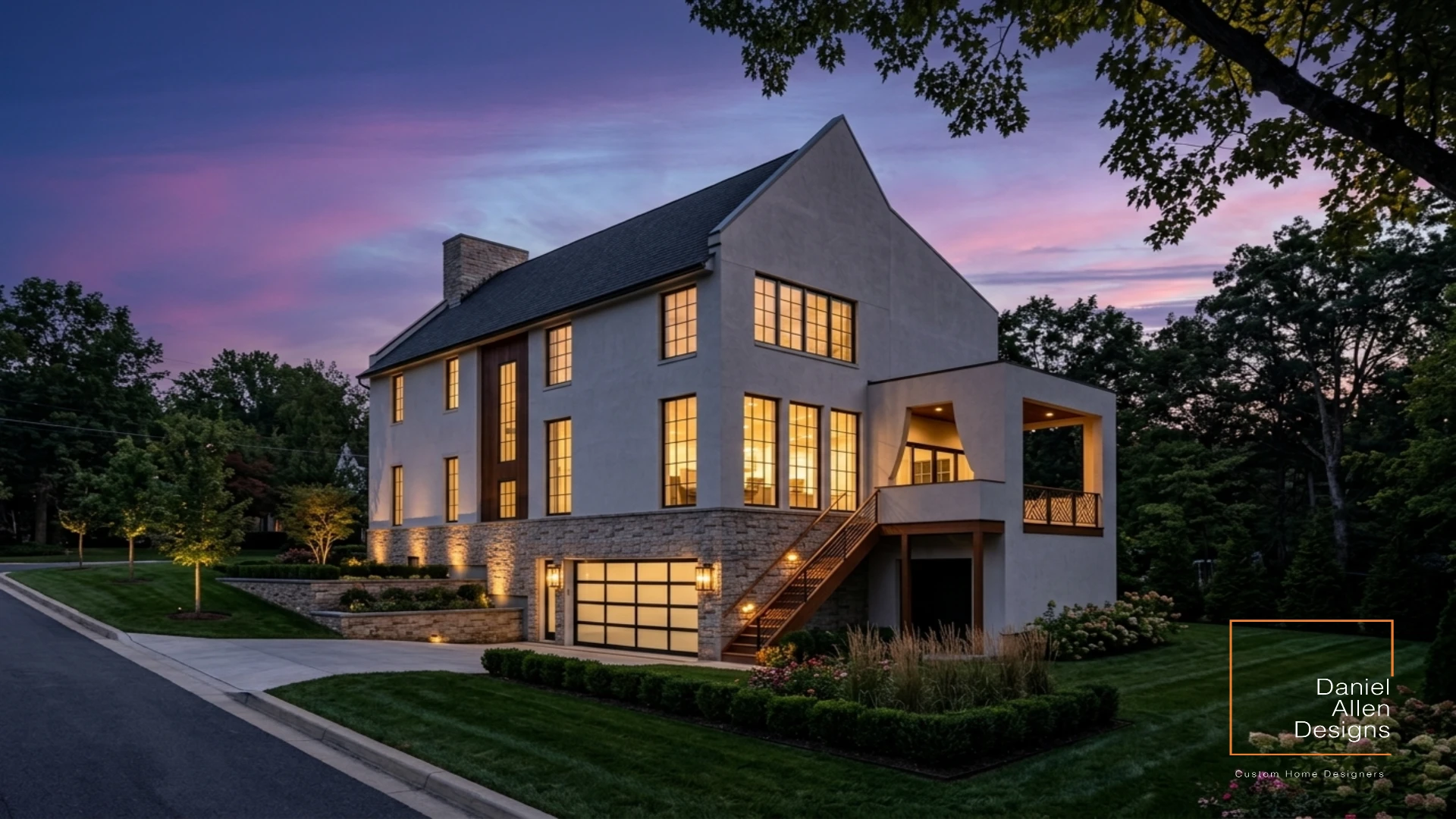
We designed two 36-inch stacked retaining walls along the side and front yard, engineered with integrated drainage and tied back to the foundation walls. The retaining walls effectively lower the finished grade plane relative to the basement slab — not by digging the basement deeper, but by raising the measured grade around it. The result: a usable, level yard for the family, proper drainage away from the foundation, and a basement that met the 50% burial threshold. Every square foot of basement space fell outside the FAR calculation.

Both constraints resolved. The program was restored. The project was viable.

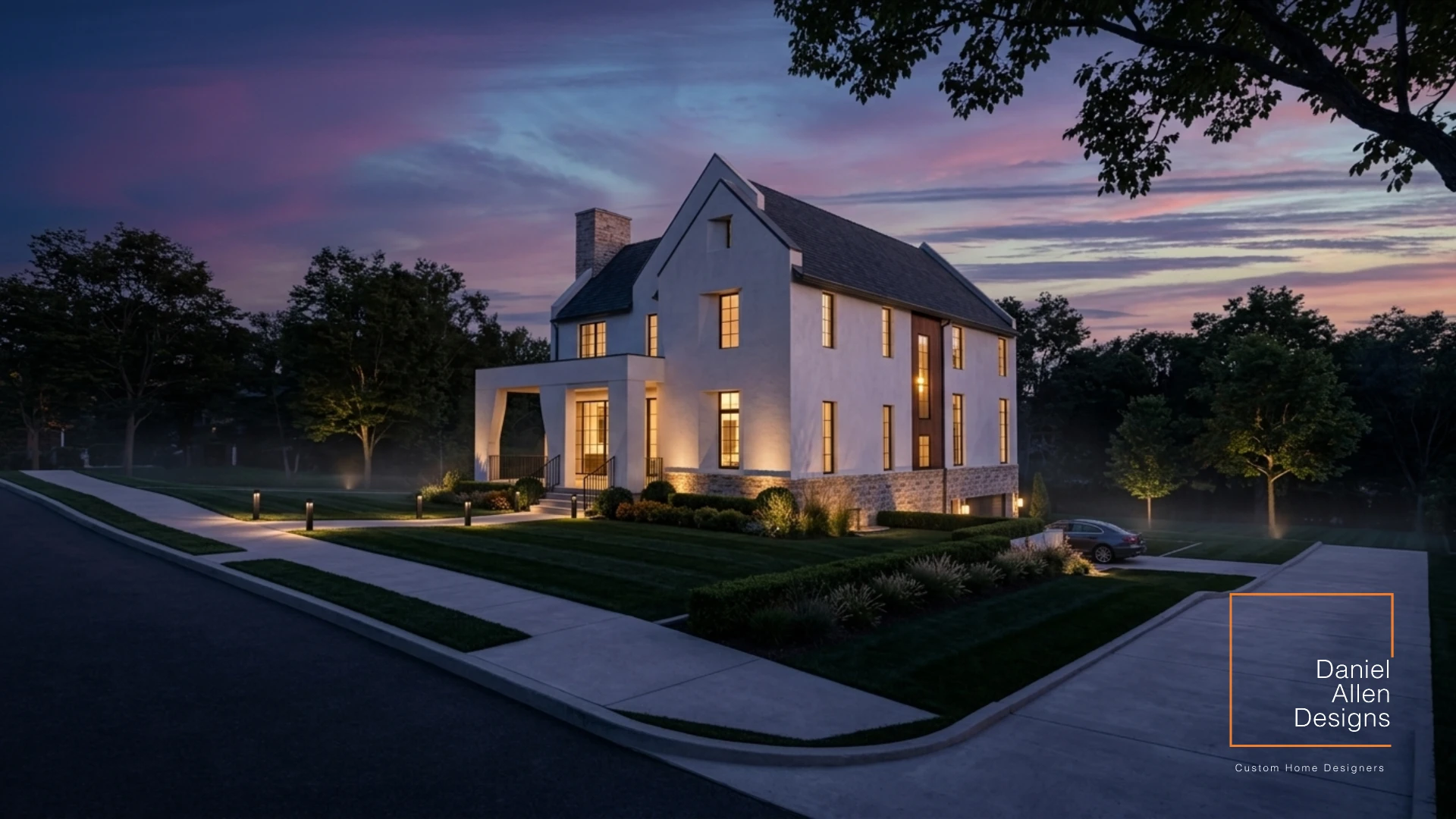
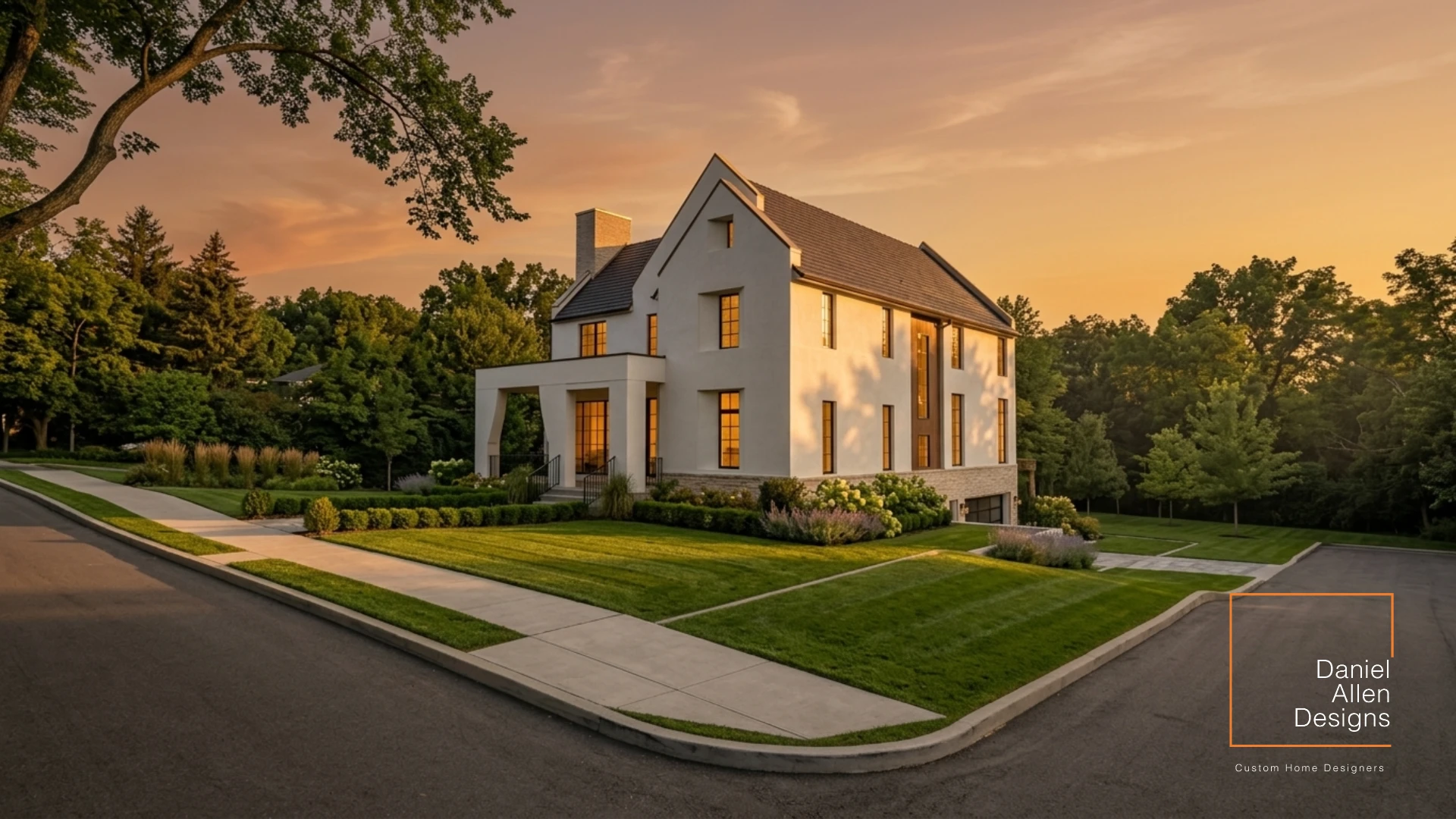
Daniel Allen Designs custom home in Virginia-Highland, Atlanta, Georgia — European stucco corner elevation at dusk with landscape lighting and stone base
Custom home corner elevation at dusk by Daniel Allen Designs — Virginia-Highland, Atlanta, Georgia

The Problem: The Boundary Tree

A mature hardwood straddling the property line introduced a constraint that zoning regulations cannot fully capture but an arborist can enforce. Before a shovel touches the ground on a site with significant trees in Atlanta, a certified arborist evaluates the Critical Root Zone — the area around the trunk where root disturbance, soil compaction, or grade changes will compromise the tree's viability. That zone is not a suggestion. It is a condition of the land disturbance permit.

On this site, the arborist's mandated protection zone extended well into what would have been the building footprint under a standard foundation layout. The root ball sat directly in the path of the basement wall. The canopy drip line constrained equipment access and overhead clearance. A conventional approach — excavation across the full footprint, continuous basement walls on all sides — would have required removing the tree entirely. For a boundary tree in a neighborhood defined by its canopy, that was a non-starter. The arborist would not approve it. The neighbors would not accept it. And the site would lose the very character that makes Virginia Highland valuable.

The solution required the foundation to yield to the tree, then reclaim what it gave up above grade.

The basement footprint was stepped inward at the corner nearest the tree, notching the foundation wall to clear the root ball entirely. No excavation, no soil compaction, no grade changes within the protection zone. The tree's root system remained undisturbed.

At the main level, the floor plate was extended back to the original building footprint through a structural cantilever — a steel beam and joist assembly that projects the floor slab beyond the foundation wall below, recovering the square footage lost at the basement level while placing no load within the tree's protected zone. The cantilever required early coordination with the structural engineer during Design Development to specify beam sizing, bearing conditions, and deflection limits. Those decisions were resolved before a single permit drawing was issued — not discovered in the field when framing was already underway.

From inside the cantilevered room, you would never know the floor extends past the foundation. The ceiling heights are consistent. The floor is level. The wall planes are continuous. Below, the tree's root system is intact and uncompromised.

The tree remains. The square footage is whole.

Design challenges don't disappear when you ignore them. They show up in change orders, schedule delays, and compromised programs. The work happens in the drawings — or it happens on the job site at three times the cost.

Builder's Eye: What This Required

These solutions were not discovered during construction. They were identified, resolved, and documented in the design phase — which is the only place where they are inexpensive to fix. A retaining wall added after the foundation is poured costs three times what it costs on a drawing. A cantilever discovered during framing delays the schedule by weeks while the engineer recalculates and the steel fabricator re-queues. The Builder's Eye review exists to find these problems on paper, when the cost of change is measured in hours — not months.

The Builder's Eye review on this project addressed:

  • Zoning and Code Interpretation

    Reading the FAR exclusion threshold and garage cap as interlocking design variables, not fixed constraints. Most designers treat these as limits. We treated them as a system of equations with one solution — the retaining walls that resolved both constraints with a single move.

  • Site Engineering Coordination

    Retaining wall design integrated into grading and drainage plans from the outset, not added after the foundation was set. The walls had to tie into the foundation waterproofing system, direct surface water away from the basement, and meet structural engineering requirements for soil loading — all coordinated across civil, structural, and landscape consultants before permitting.

  • Arborist and Tree Preservation

    The arborist's Critical Root Zone defined a hard boundary that the foundation could not cross. We mapped the exclusion zone against the building footprint during Schematic Design and developed the stepped foundation and cantilever solution before the arborist's final report was even issued — so the design was ready when the constraint was confirmed.

  • Structural Feasibility

    Cantilever loads identified early and handed to the structural engineer with clear design intent — beam sizing, span dimensions, bearing conditions, and deflection limits documented in the Design Development package. The engineer received a problem with a proposed solution, not an open-ended question discovered during framing.

  • Cost Transparency

    The retaining walls, stepped foundation, cantilever structure, and arborist-mandated protection measures were all priced during Design Development. The client saw the cost impact of every constraint resolution before committing to construction — not as change orders after permit issuance when the leverage to adjust scope has already evaporated.

The street-facing elevation reads as a composed, restrained urban home — white stucco with natural stone, black steel windows, and a roofline that holds its own against two public street frontages. The rear opens to a two-story glass wall with unobstructed views to the level yard beyond. The family has 3,750 square feet of living space, a two-car basement garage, a level yard, and a mature tree that predates the house by decades. Nothing about the finished home reads as "constrained." That is the point.

Gallery

Project Images

More Projects

Explore Other Case Studies

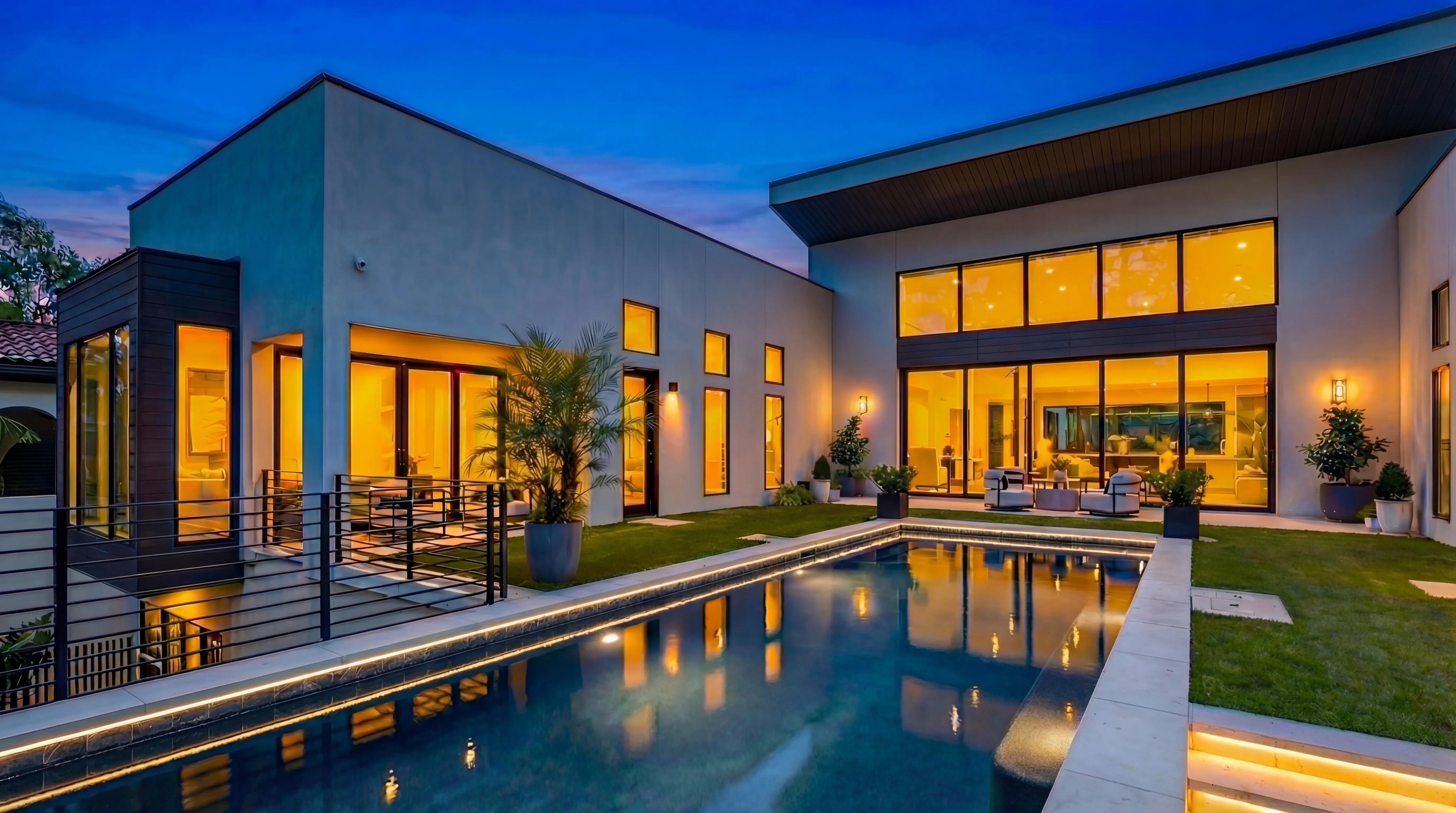
Daniel Allen Designs modern stucco courtyard home with pool in Buckhead, Atlanta, Georgia

Buckhead Courtyard Residence

7,800 SF modern courtyard home with infinity pool and resort-level outdoor living.

View Case Study
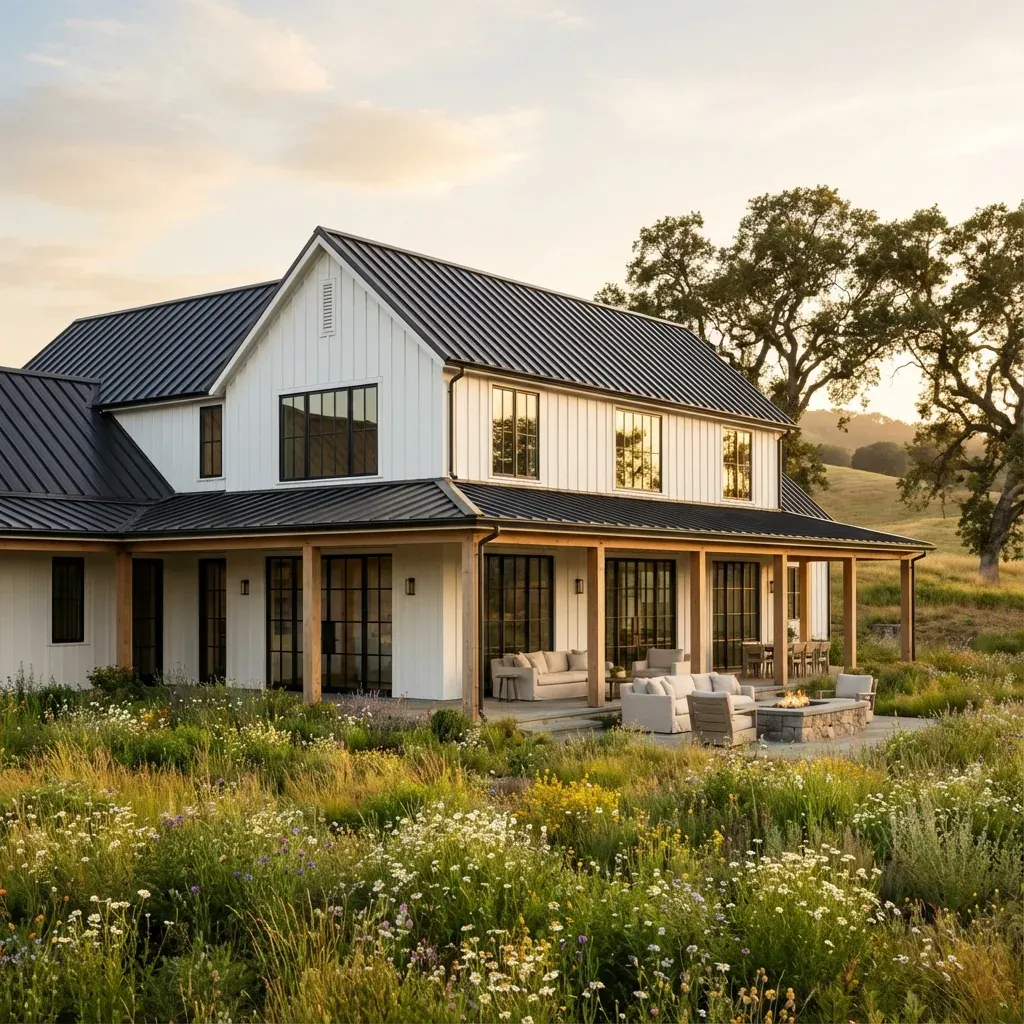
Daniel Allen Designs contemporary farmhouse custom home in Milton, Georgia

The Milton Farmhouse

6,400 SF contemporary farmhouse honoring Milton's pastoral character with premium finishes.

View Case Study

Inspired by This Project?

Every home in our portfolio started with a conversation about vision, site, and possibility.

Start Your Project View Full Portfolio